
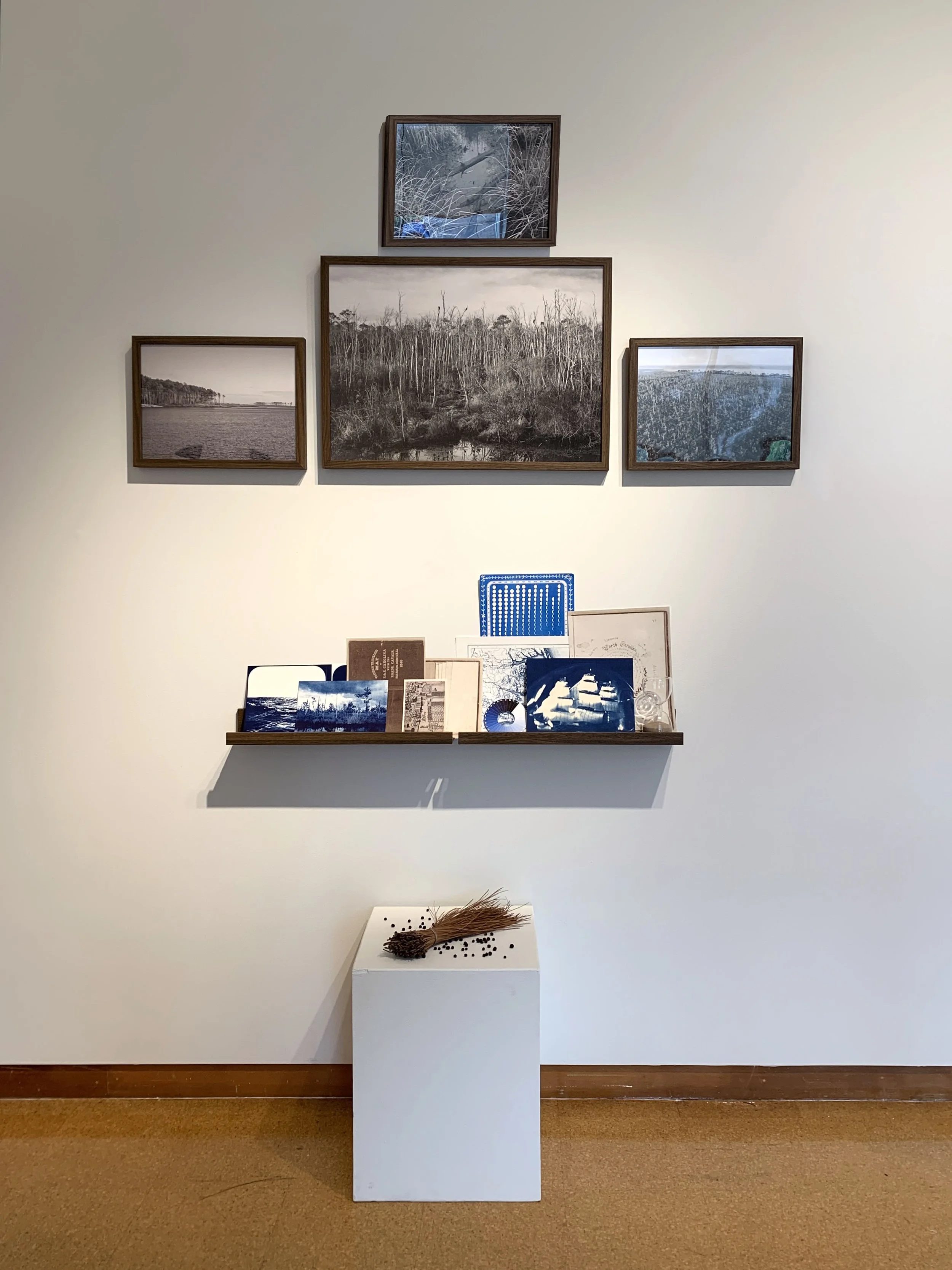
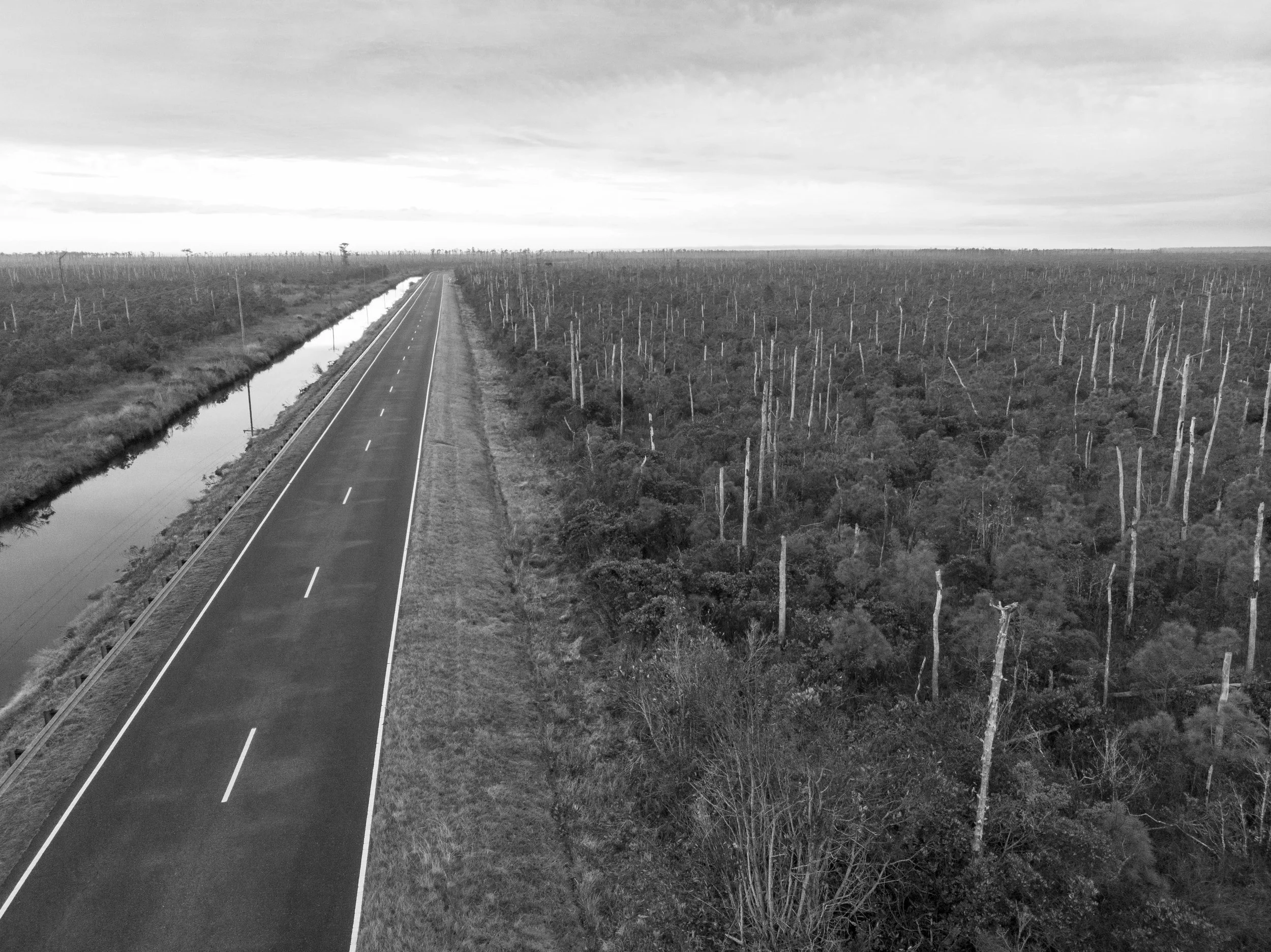
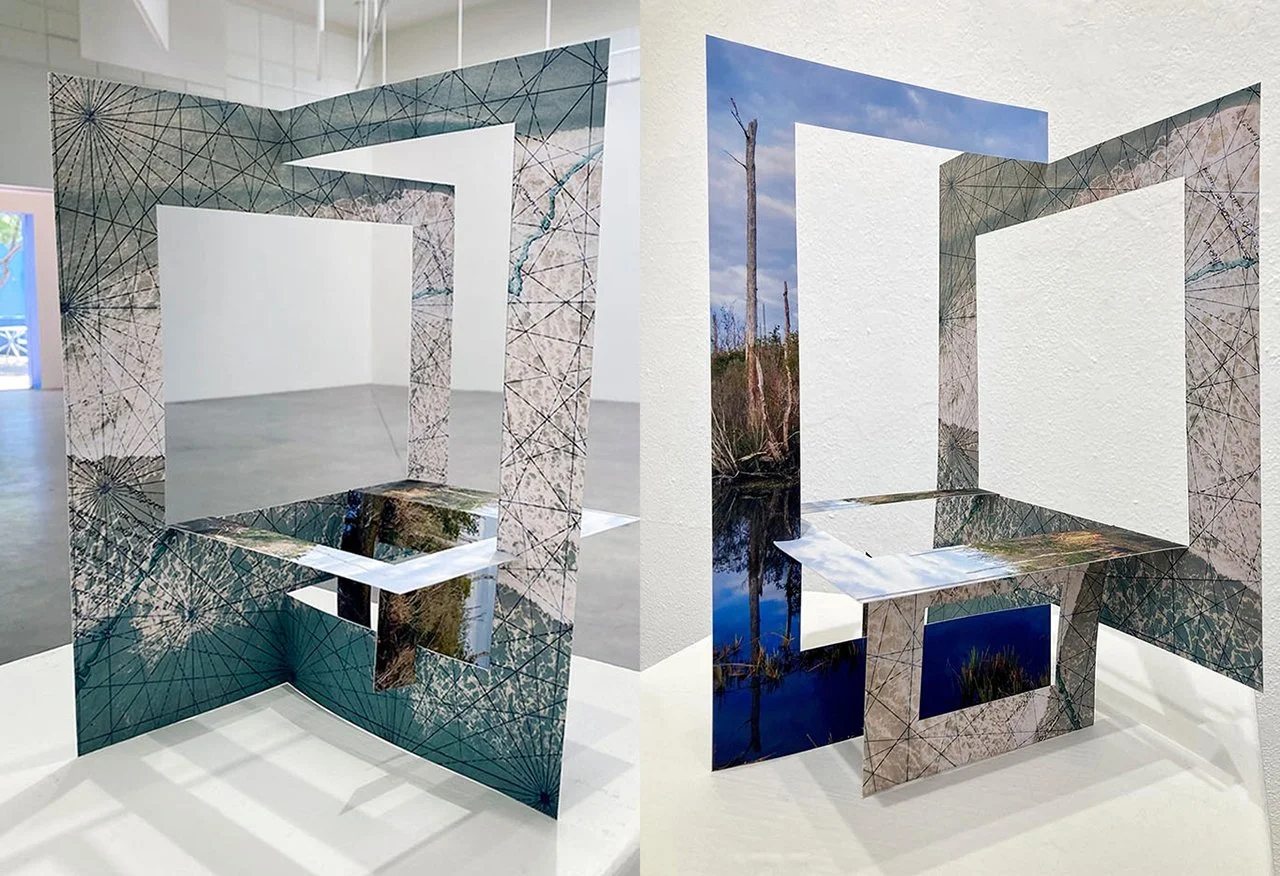




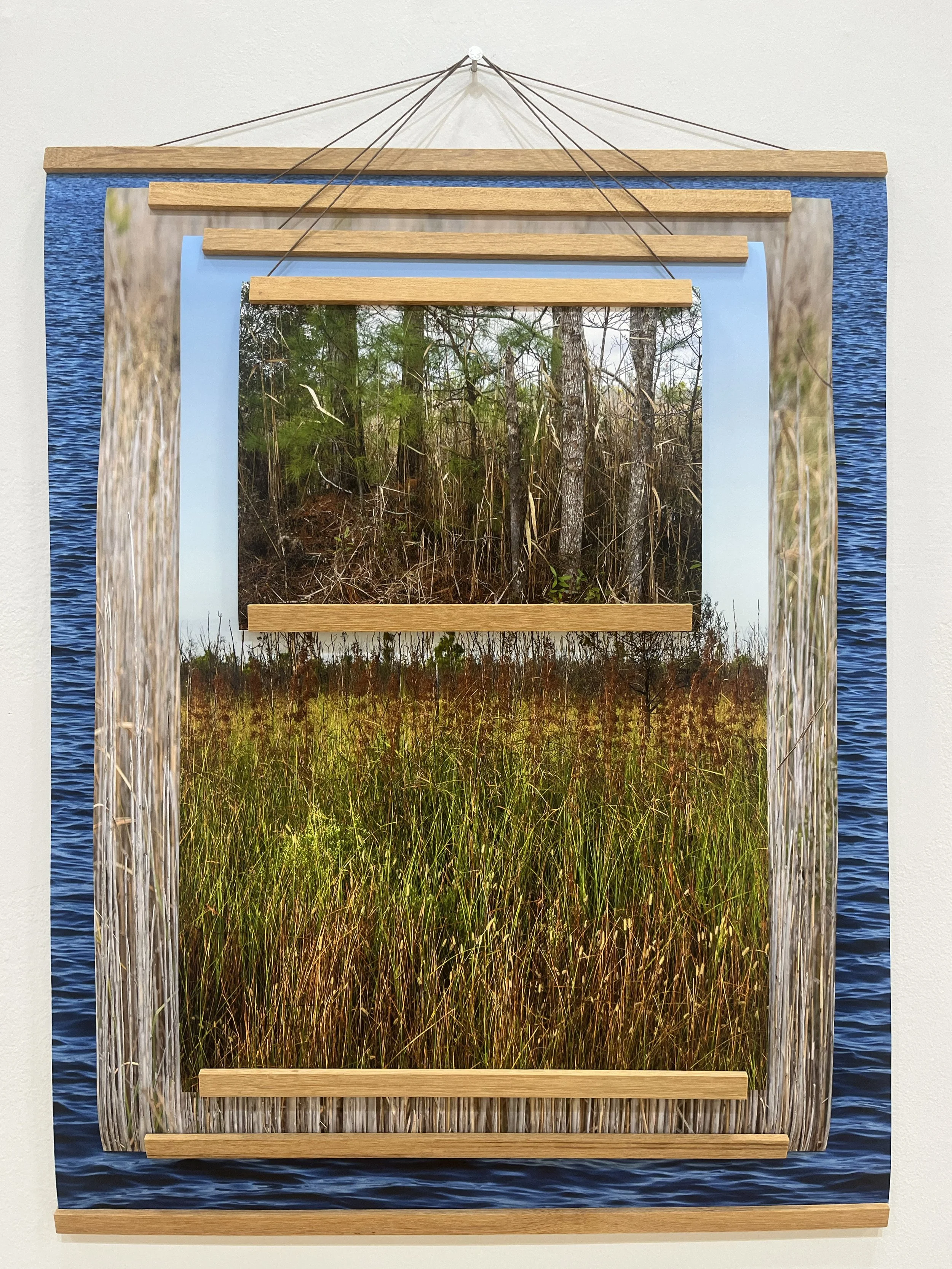


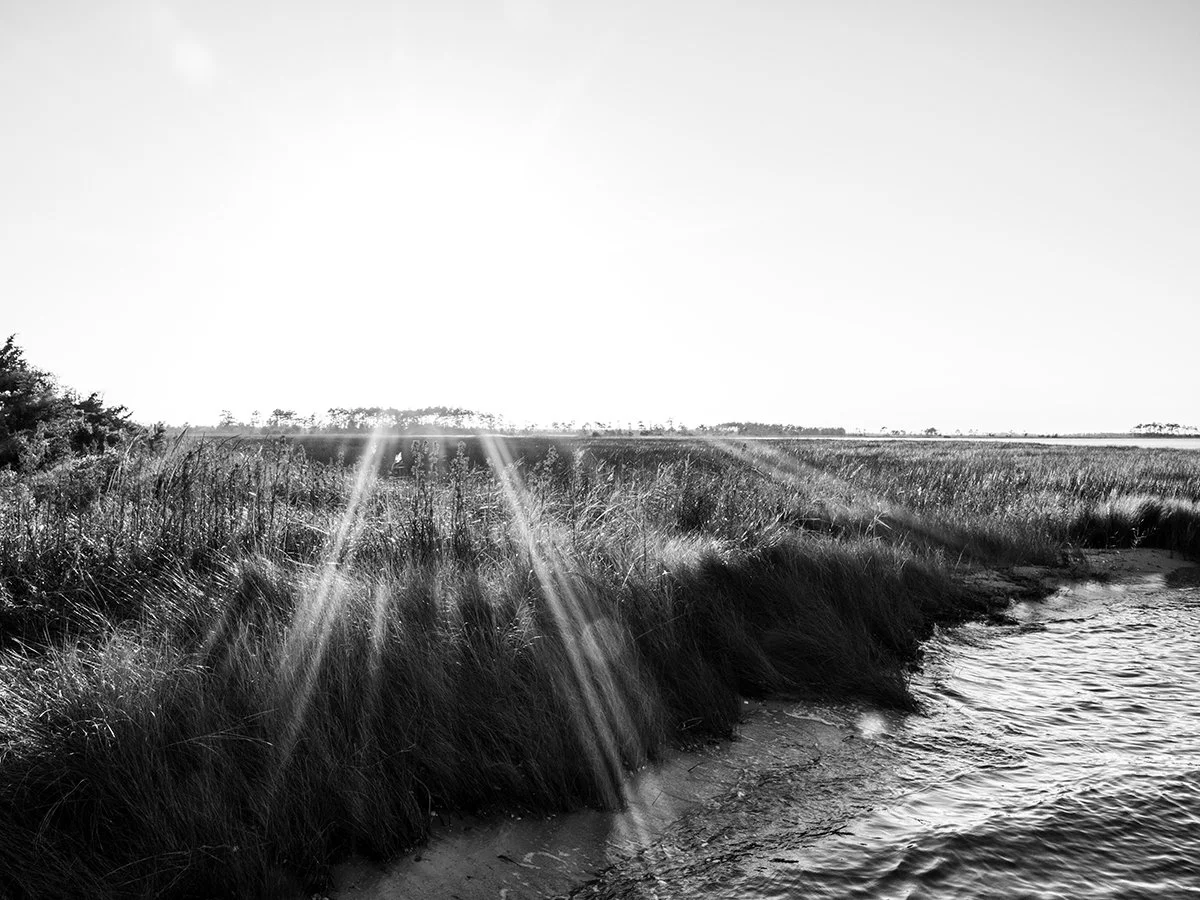
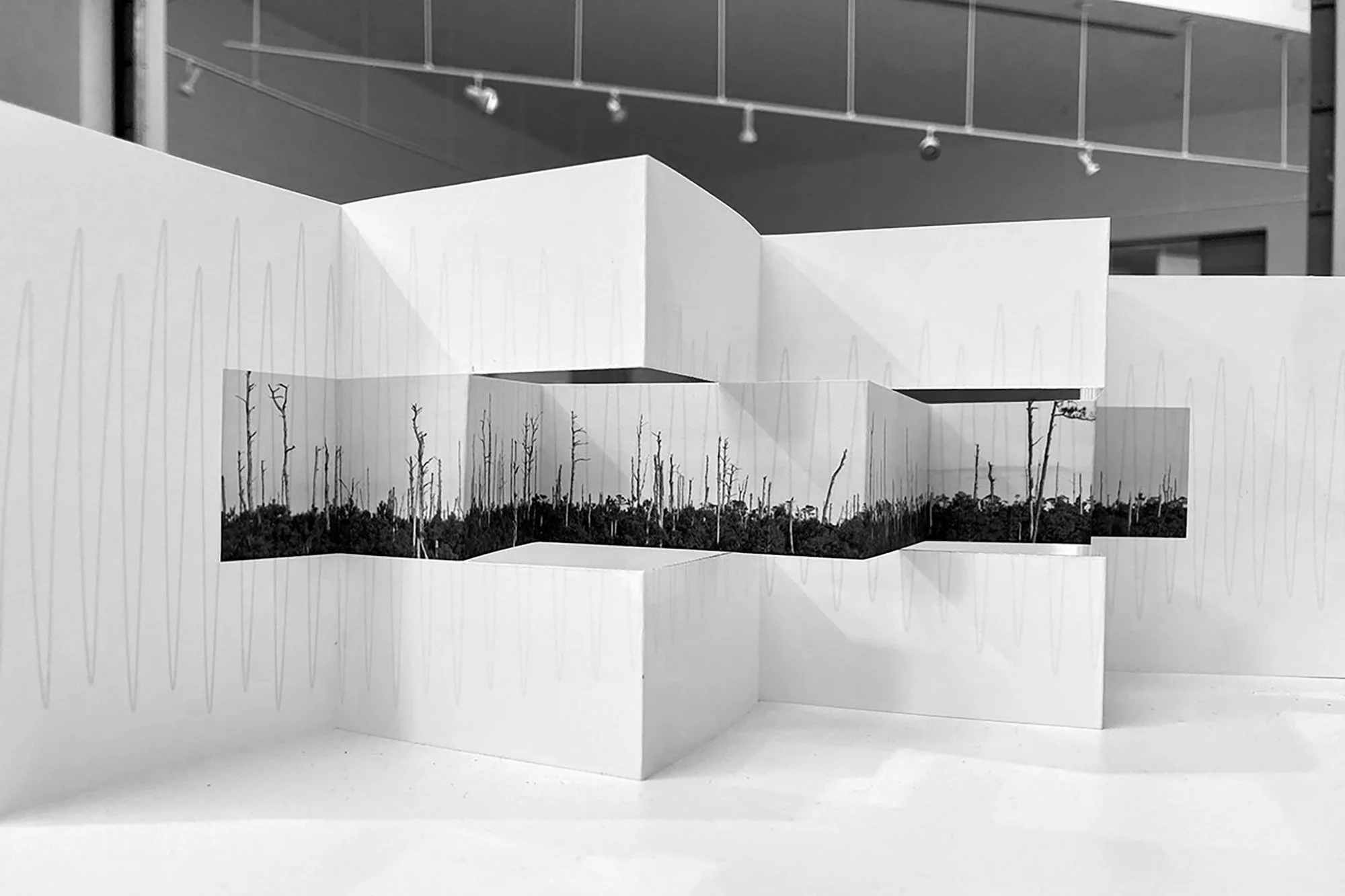
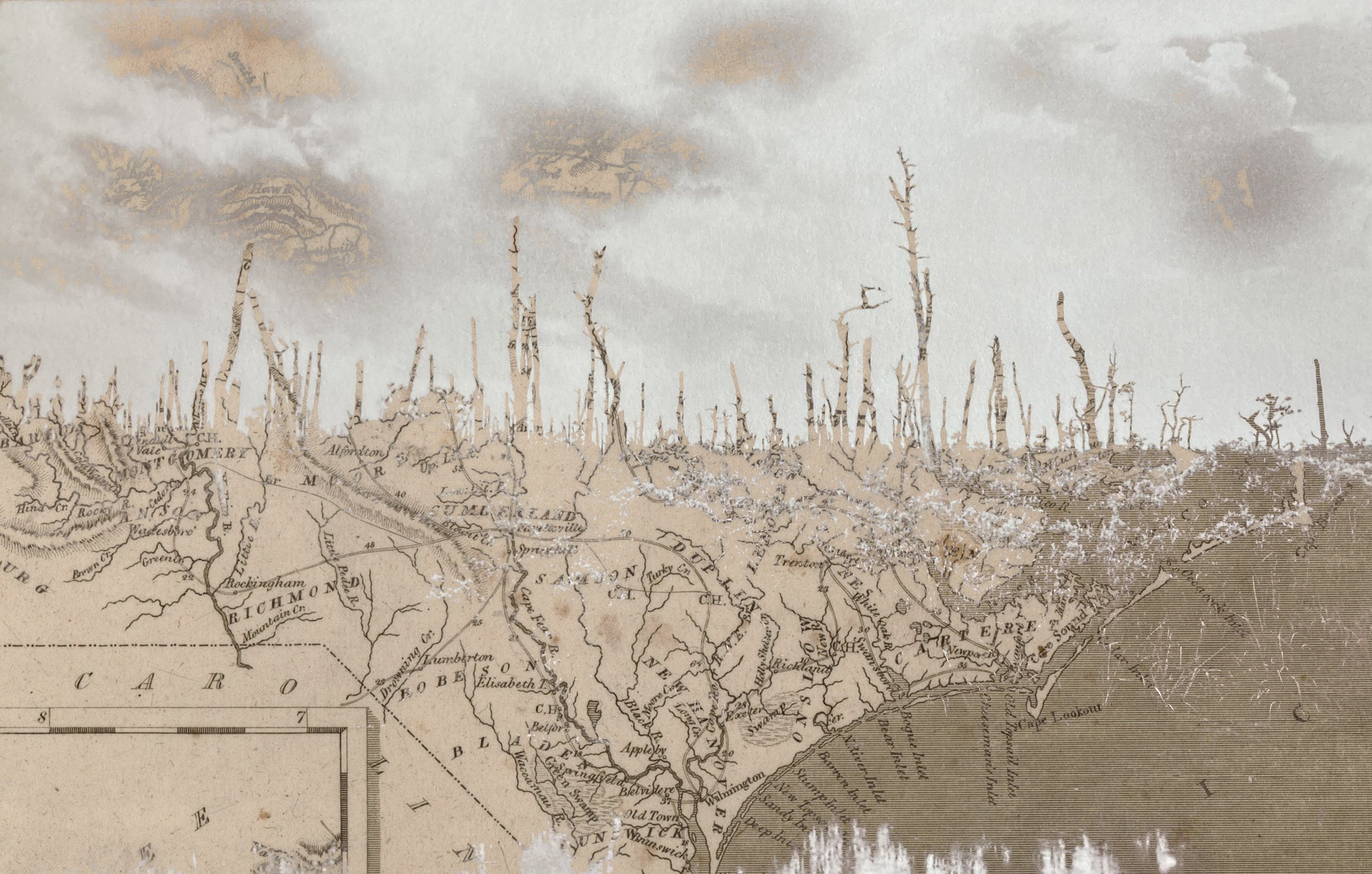
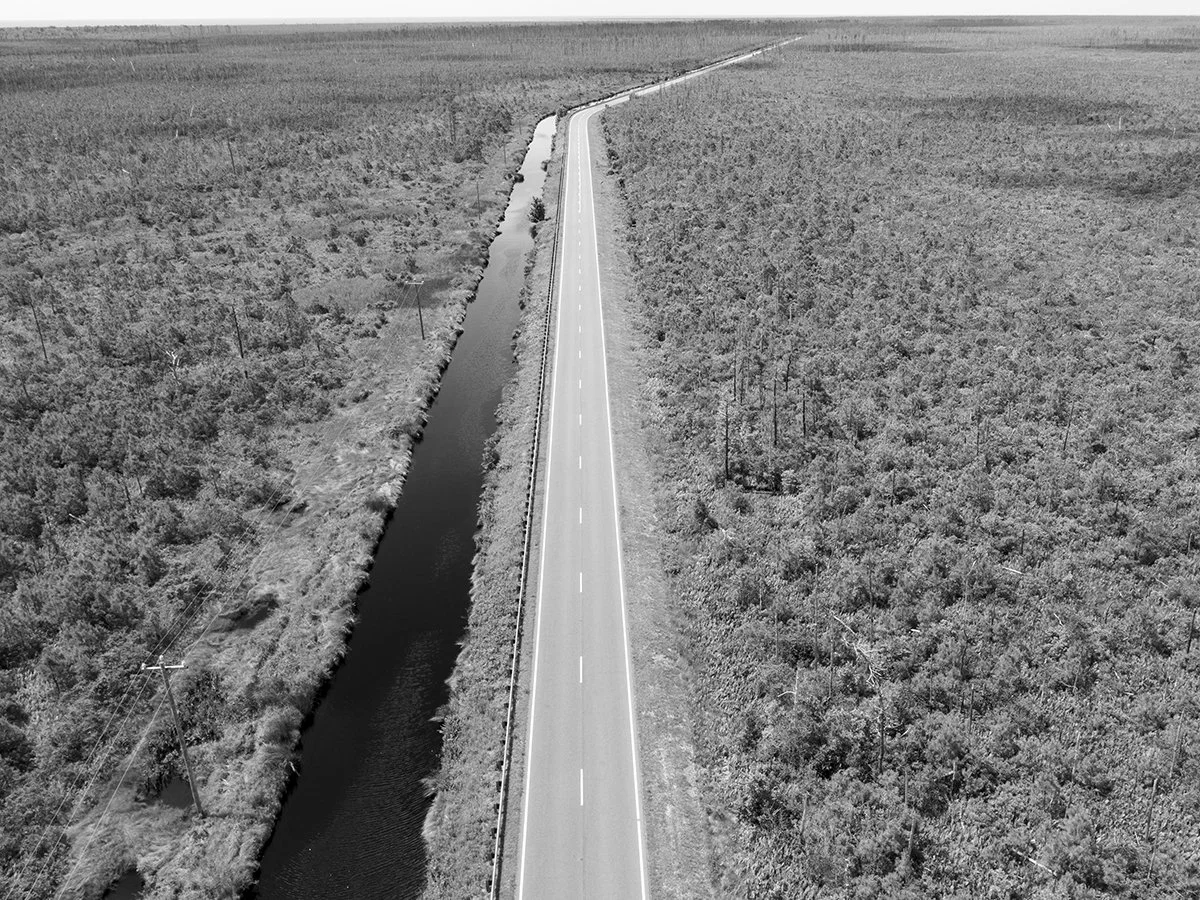
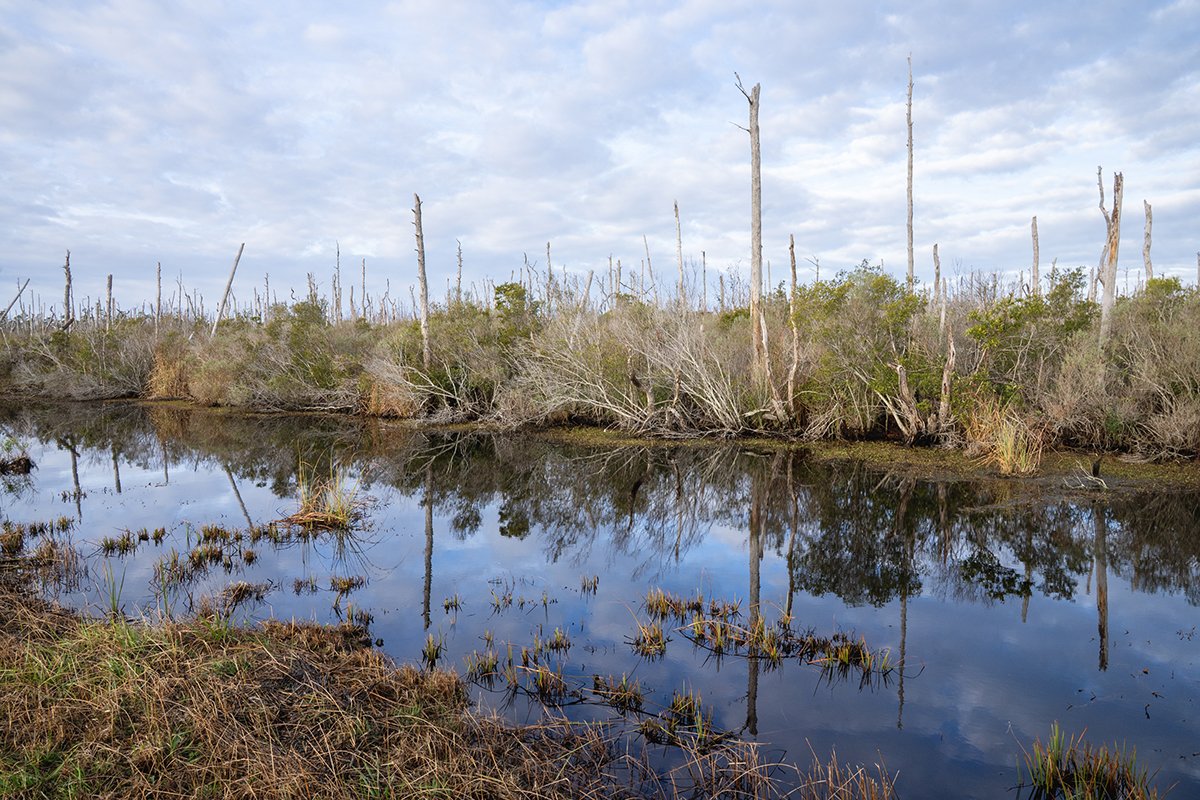
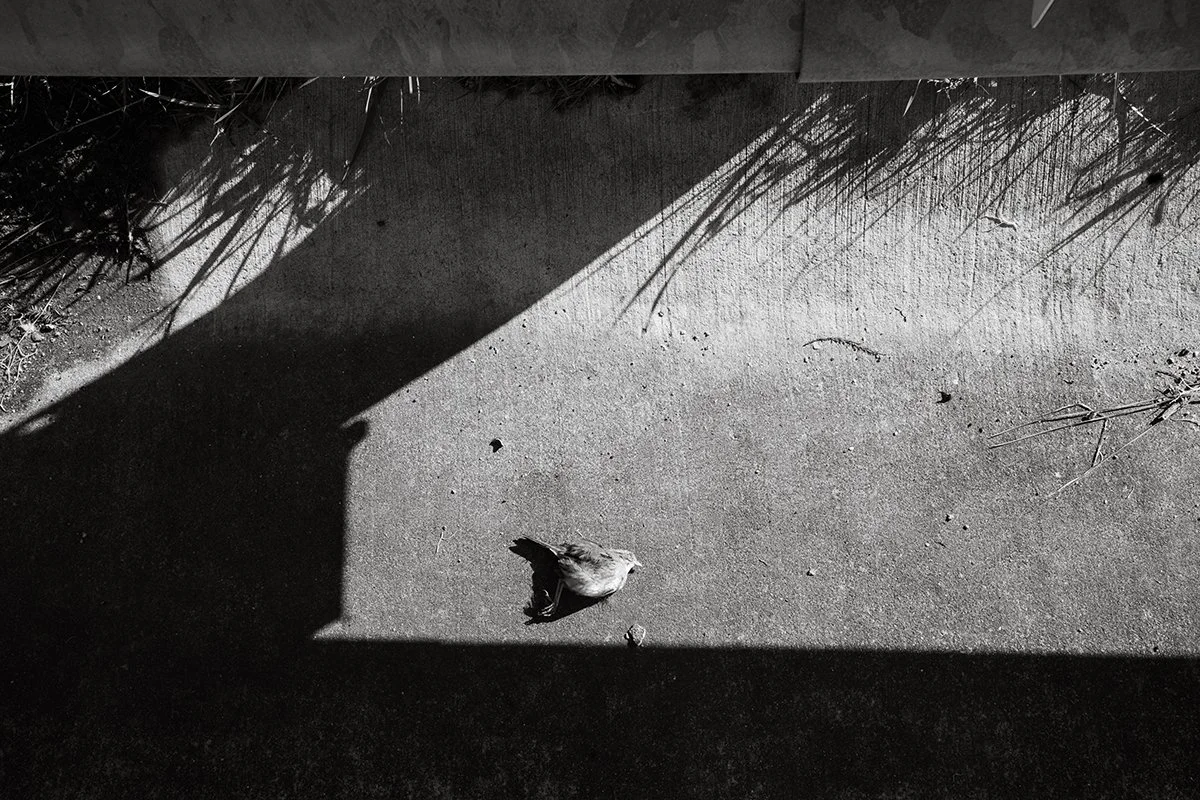
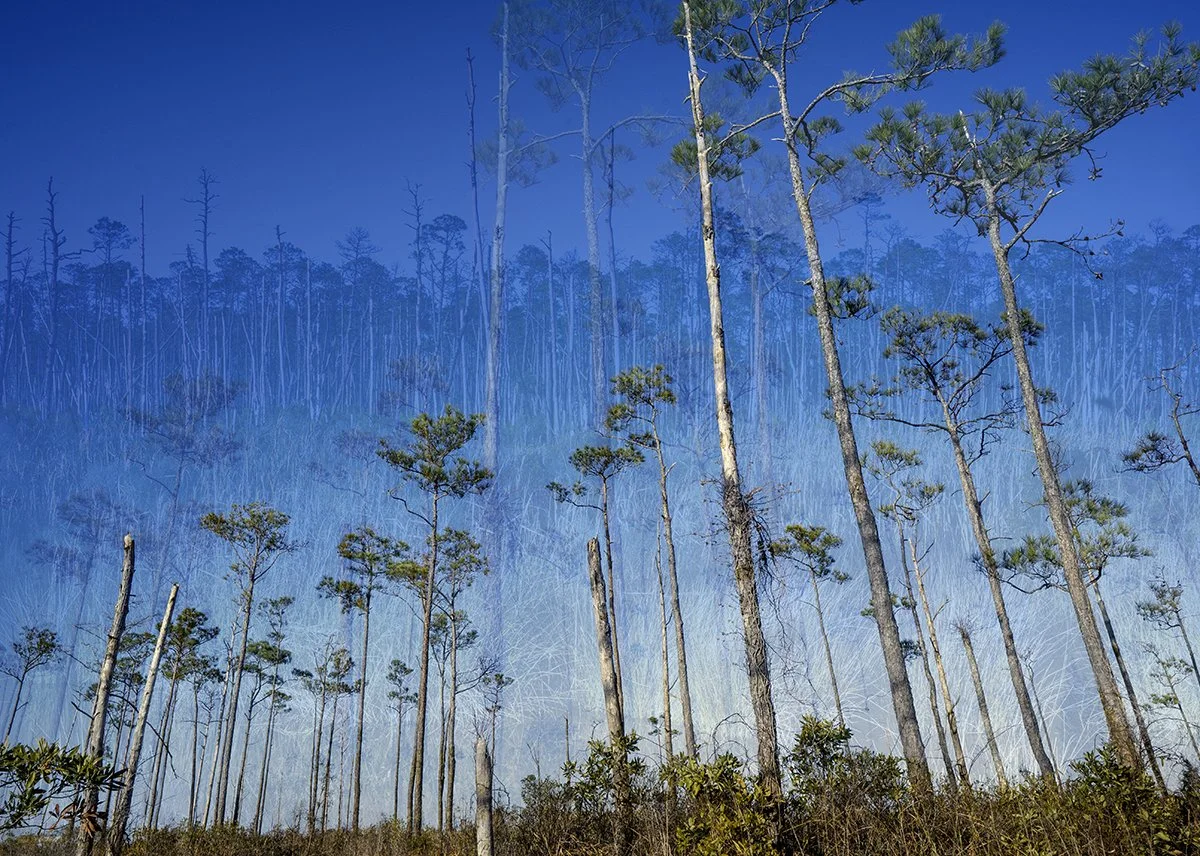
Thirteen Hours to Fall is an interdisciplinary visual arts project that examines the climate crisis through an investigation of contemporary and future ghost forests along the mid-Atlantic coast. Ghost forests, large expanses of dead and dying trees caused by saltwater intrusion, have become striking indicators of rising sea levels and accelerating environmental change. By documenting these transitional landscapes, the project explores how ecological transformation is inseparable from the region's layered histories of colonialism, extraction, and racial injustice. The work traces the environmental consequences of more than four centuries of colonial capitalism, industrial timber harvesting, plantation agriculture, and ongoing climate change.
Drawing upon environmental history and intersectional research, Thirteen Hours to Fall considers how the displacement of Indigenous communities, the appropriation of their lands, and the enduring legacies of slavery and white supremacy have shaped both the landscape and the lives of those who continue to inhabit it. The emergence of ghost forests reflects not only ecological collapse, but also the cumulative impact of systems that have prioritized extraction over stewardship. These forces have contributed to widespread tree loss, declining biodiversity, reduced carbon sequestration, and increasing vulnerability for coastal communities.
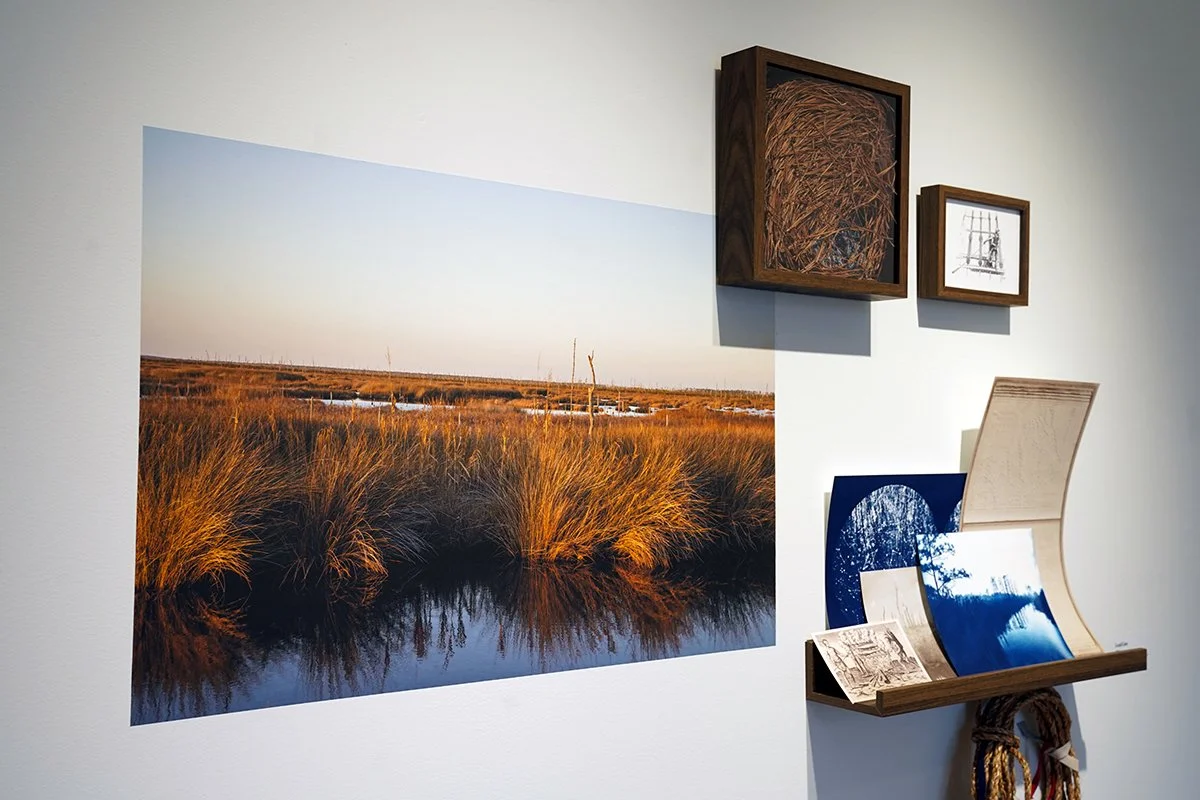
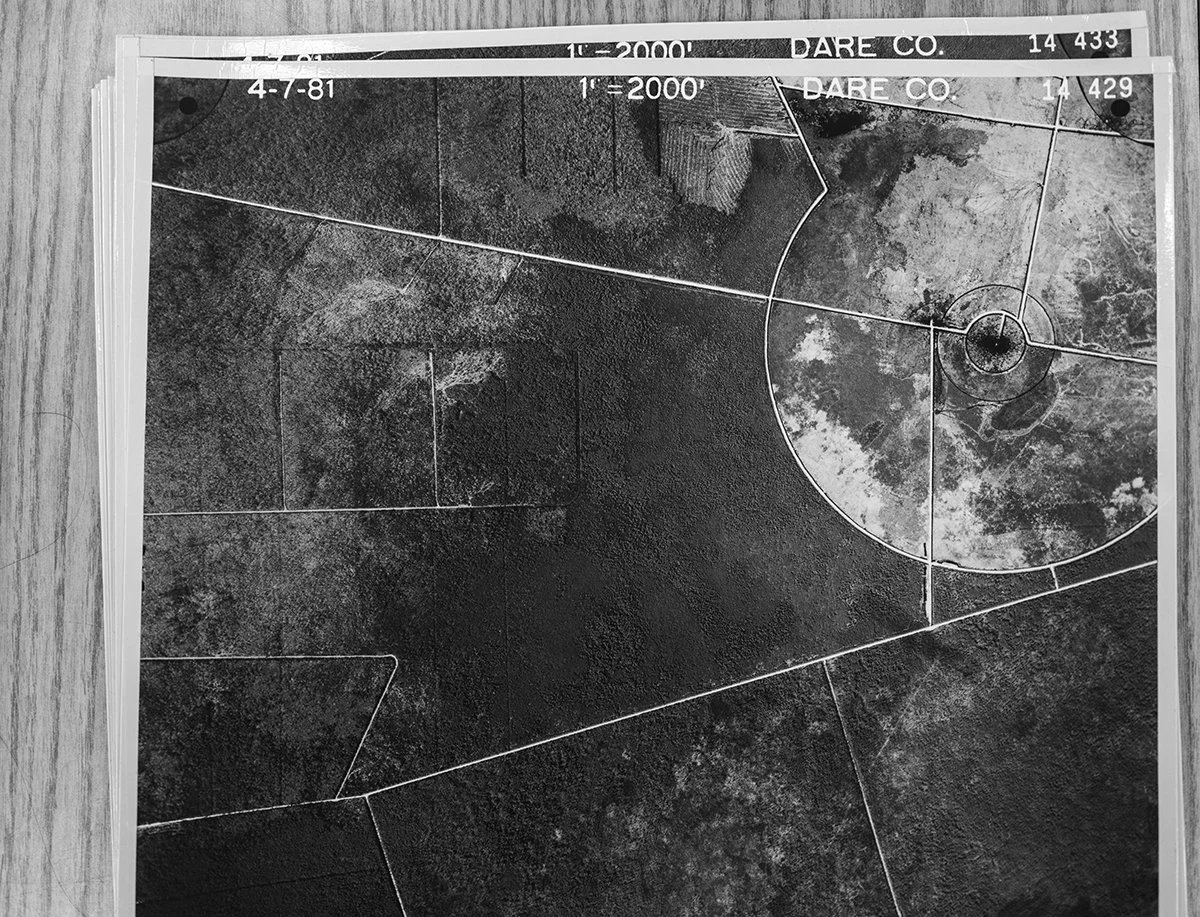
Rather than presenting climate change as an isolated environmental issue, this project positions it as a convergence of ecological, historical, and social realities. Through contemporary landscape imagery paired with archival materials, Thirteen Hours to Fall invites viewers to reflect on the complex relationships between land, memory, labor, and environmental responsibility.